
New Science Is Changing How We Protect Giant Sequoias—Policy Should Catch Up
Breakthrough Research Shows These Dynamic Forests Evolved with Intense Wildfire
For millions of years, giant sequoias have stood as quiet witnesses to time itself—reaching skyward through centuries of change, enduring flames, burning up, and rising from ash to begin again. Long before modern science and policy debates, these forests learned the natural pathways of renewal. Through wildfire after wildfire, and across extremely dynamic epochs of Earth’s history, giant sequoias continued to find their place on the landscape.
Today, as public concern grows over their future in a changing climate, new science is confirming what these trees have been showing us all along: that high-intensity fire is essential to their survival story. These forests, shaped by varied natural disturbance processes over evolutionary timescales, carry within them a remarkable ability not just to persist, but to thrive after intense wildfire.
And yet, policy is moving in the opposite direction of the science. The inaccurately named Save Our Sequoias Act (S. 4103), which leans heavily on accelerated logging and large-scale interventions in all remaining giant sequoia groves, is now advancing through Congress after passing the House. Framed as restoration, but predicated upon overrides of bedrock environmental laws, the core functions of this bill run counter to the science and would inherently degrade giant sequoia ecosystems and the biodiversity they support.
If you walk through a giant sequoia grove immediately after intense wildfire, the scene may feel like loss to some, but the truth is far more beautiful. For years, we’ve been told that fire suppression has left these forests “overgrown,” primed for “catastrophic” wildfire and in need of aggressive intervention ostensibly to prevent high-intensity fire from occurring. That narrative is now being used to justify sweeping policy changes, even as new science challenges the assumptions driving current and proposed management strategies.
A newly published study by Dr. Chad Hanson of the John Muir Project asks a fundamental question: did a century of fire suppression create an unnatural high-intensity fire problem in giant sequoia groves? The answer is no. Even after recent large wildfires, fire of all intensities remains far less frequent than it was before fire suppression began. The study also found no meaningful relationship between how long a forest has gone without fire and how intensely it burns when fire returns. This directly challenges the widely repeated claim that today’s forests are experiencing too much “severe” wildfire due to “overgrown” conditions.
The research also raises important questions about one of the most commonly proposed solutions to reducing high-intensity fire: using lower-intensity prescribed fire as a new wildfire suppression tactic. While natural lower-intensity fire has a role in these forests, managing forests with the goal of preventing higher-intensity fire may unintentionally alter these ecosystems in ways that degrade their integrity and undermine their viability over time. The study shows that while lower-intensity prescribed fire can produce a pulse of giant sequoia seedlings, that initial burst does not lead to lasting regeneration. After two decades, 82% of the studied areas lacked any giant sequoia regeneration at all.
A second new study by Dr. Chad Hanson and a team of ecologists, focused on the Redwood Mountain Grove after the 2021 KNP Complex fire, reinforces these findings. (Watch researchers document this firsthand.) In areas often described as devastated, the largest high-intensity fire patches, researchers found dense and thriving regeneration in every plot—averaging about 8,000 young giant sequoias per acre, with the strongest growth in the most intensely burned patches, the “crown fire” areas where the flames reached the tops of the trees. Concerns about seed loss, shrub competition, or distance from surviving trees did not match what the scientists observed on the ground. Instead, these high-intensity burn areas created some of the best conditions for natural regeneration, exceeding the federal government’s initial modeling projections at four years post-fire by more than 21 times.
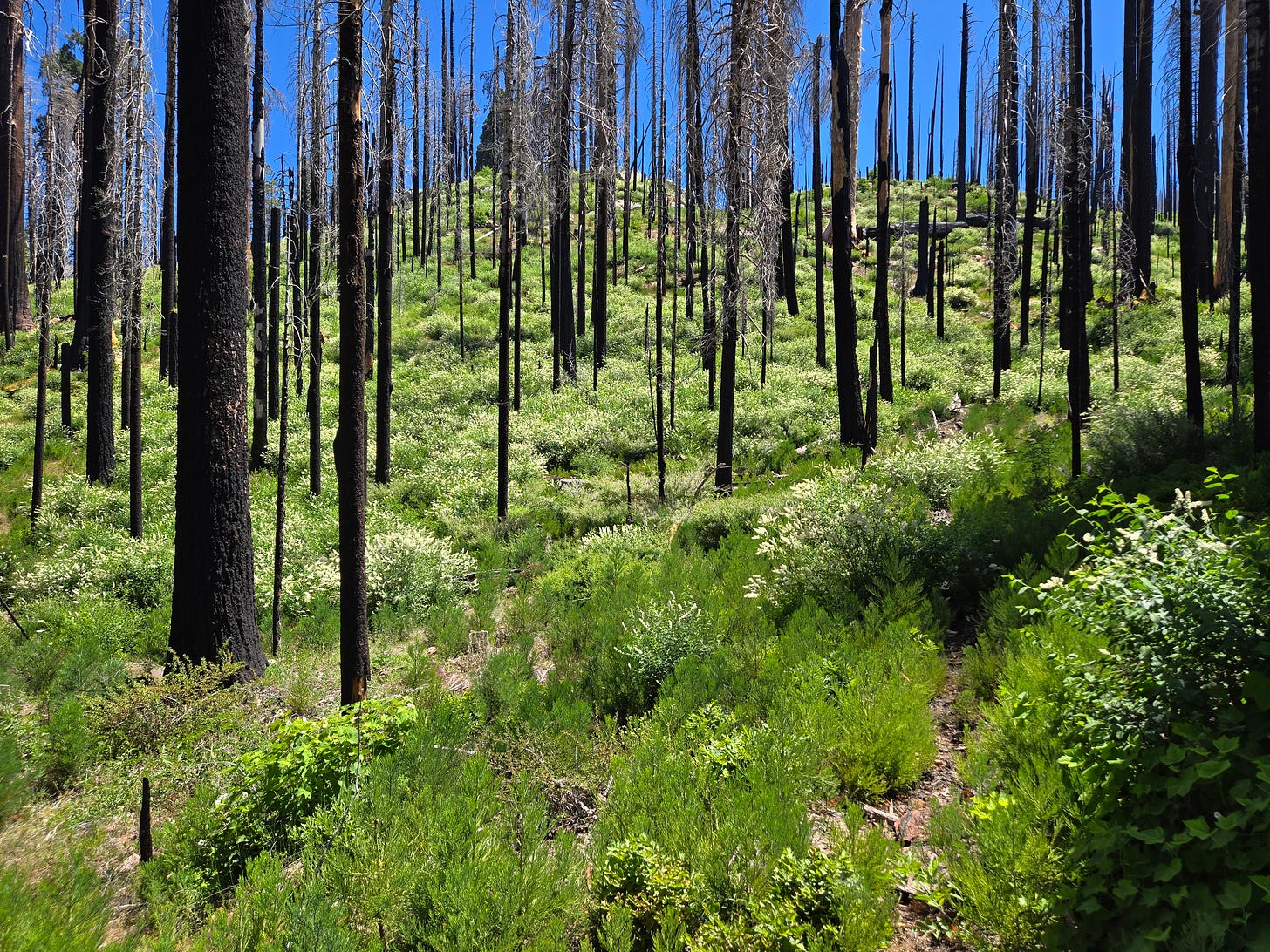
Redwood Mountain Grove natural regeneration, June 2025 © René Voss
Taken together, this new science tells a clear and consistent story: giant sequoias are not just adapted to wildfire, they depend on the full range of fire, including its most intense forms, to continue their life cycle. Efforts to suppress or replace these intense natural processes risks undermining the very future of these forests that we aim to protect.
Despite current management trends, we remain hopeful that these findings will help guide future land management decisions. However, the Save Our Sequoias Act continues to move forward, promoting logging and large-scale interventions that conflict with this growing body of science. Notably, in another recent study, Dr. Hanson and a team of ecologists found that post-fire logging, which the Save Our Sequoias Act promotes, kills 83% of the natural post-fire giant sequoia regeneration, as the logging machinery rolls over and crushes the sequoia seedlings and saplings.
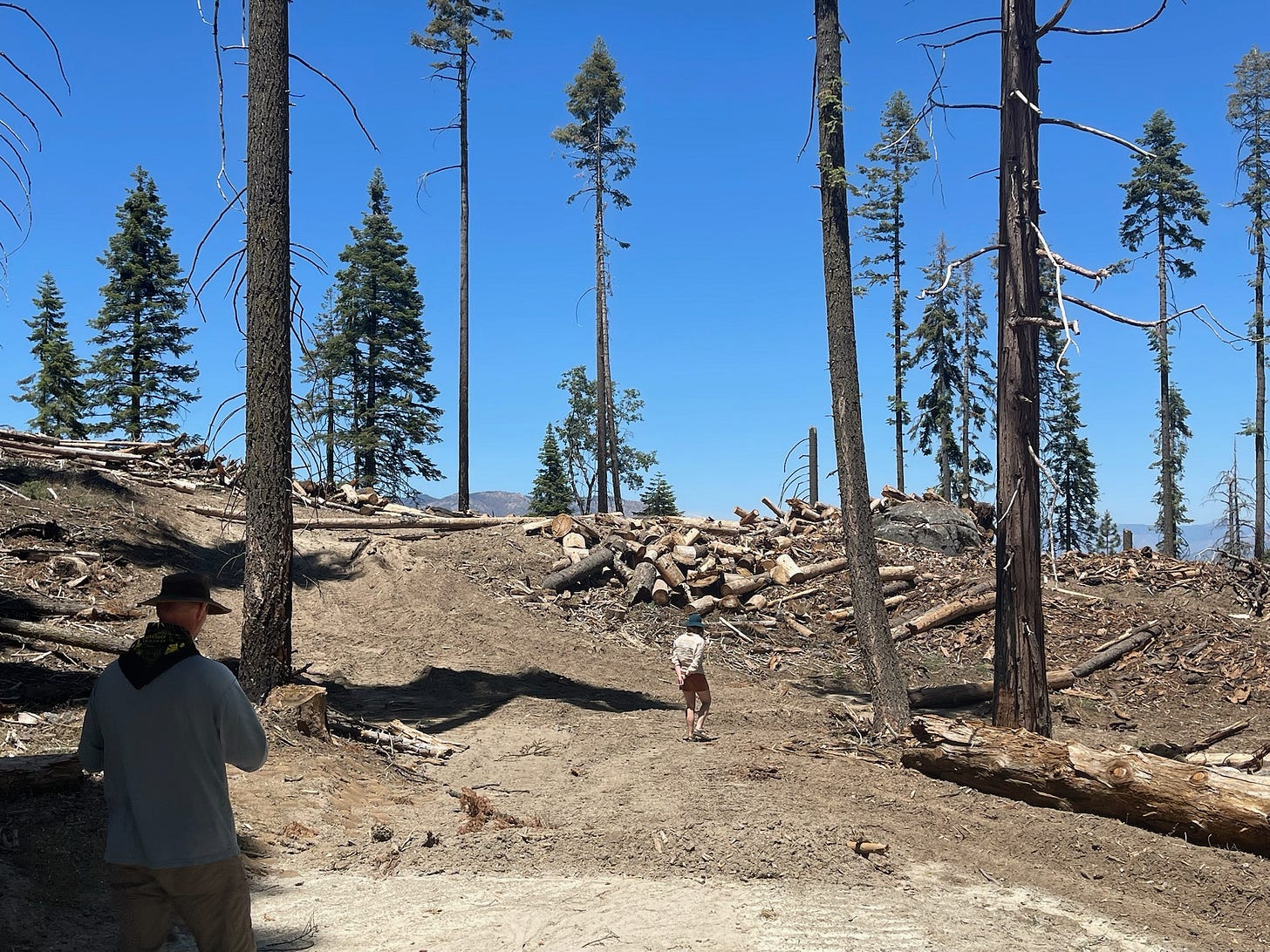
Packsaddle Grove mismanagement, June 2026 © Bekah Mamola-Hill
As land managers of wild ecosystems, the default response to uncertainty should not be aggressive habitat manipulation and commercial resource extraction, but thoughtful restraint that treads lightly and reduces opportunities for ecosystem degradation. The emerging evidence raises a critical question: if giant sequoias are successfully regenerating after high-intensity fire, and if fire levels of all intensities in these groves remain below historical norms, why are we expanding logging and attempting to eradicate supposedly “undesirable” natural ecological processes? This is the question now facing the conservation community, policymakers and the public.
The path forward should be grounded in science, not outdated assumptions about the complex natural forces that shaped giant sequoia forests. Protecting this beloved species means embracing the natural disturbance regimes and evolutionary processes that have sustained it over time—including significant mixed- and high-intensity fire components—not forcing our desired conditions across the entirety of their range.
To truly safeguard these dynamic forests, we must ensure policy catches up with the science and use our voices to foster appropriate changes in management. Contact your U.S. Senators and urge them to reacquaint themselves with the best available science and oppose the Save Our Sequoias Act in favor of management rooted in empirical evidence, natural resilience, and respect for these extraordinary ecosystems. Learn more on our Factsheet and our website about the full body of science and how your voice can make a difference that protects giant sequoia ecosystems.
Take Action: Call your U.S. Senators (Capitol Switchboard: 202-224-3121) and urge them to oppose the “Save Our Sequoias Act” logging bill, S. 4103. Tell them that the bill would severely harm giant sequoia groves, and that new science discredits the outdated assumptions in the bill.
Learn more: The Great Big Giant Sequoia Scam (Documentary Film)