Fighting Back — and Dreaming Forward — at PIELC 2026
Conferences, colleagues, and the work that doesn’t pause.
Getting to Eugene requires commitment, and for me, flying west from DC is something I genuinely dread, both for the emissions and the demands on my bionic body. But we wouldn’t miss it. This year I flew to the Bay Area to make the drive north with colleague and wildlife biologist Maya Khosla, and what a drive it was. California was impossibly, almost surreally green. As a California native, I couldn’t recall ever seeing the state so lush. We even stopped near Lassen to visit a colleague doing remarkable work for the region, a welcome reminder of why this landscape is worth fighting for.
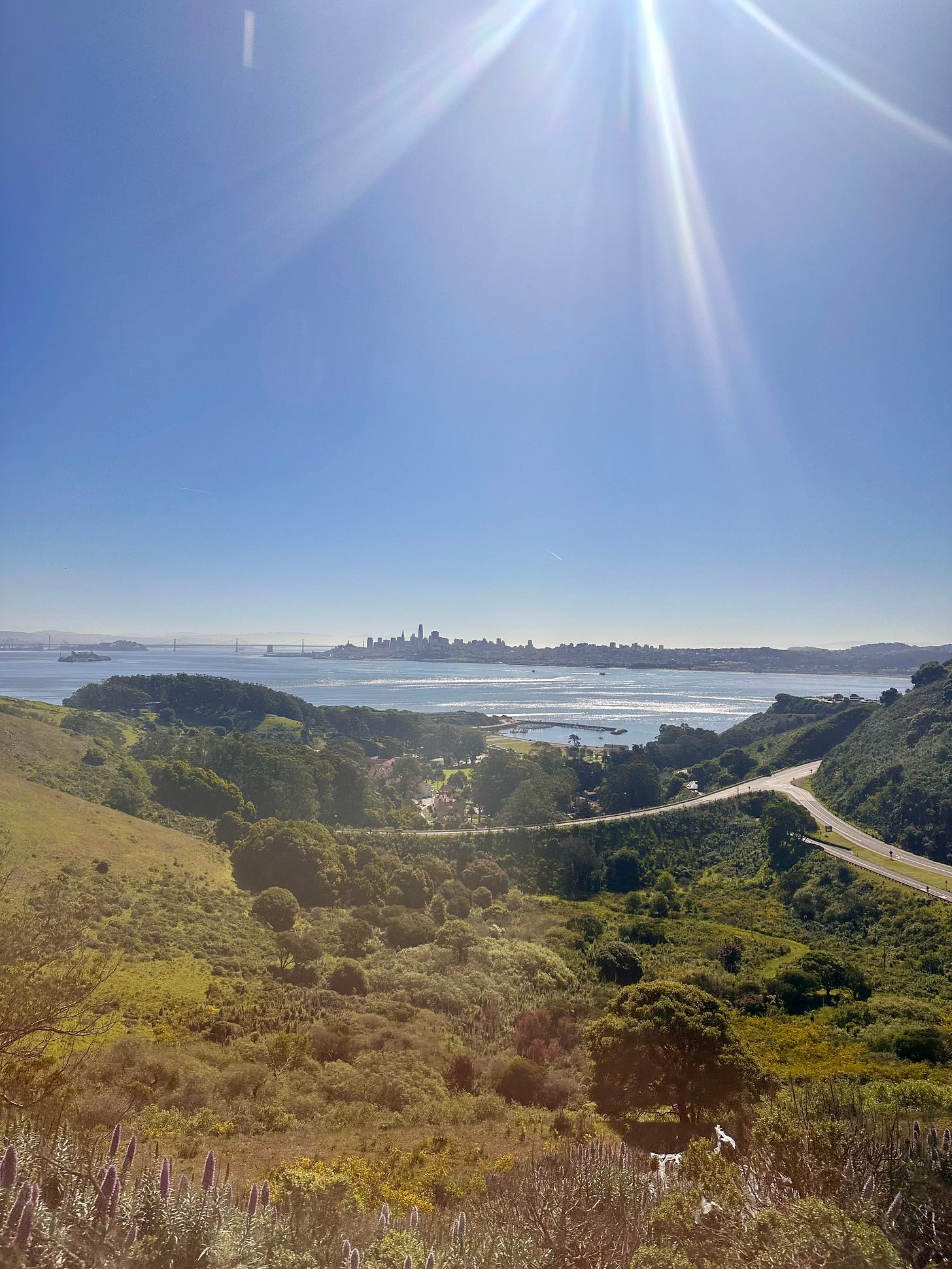
Marin Headlands, Golden Gate National Recreation Area, March 2026 © Jennifer Mamola
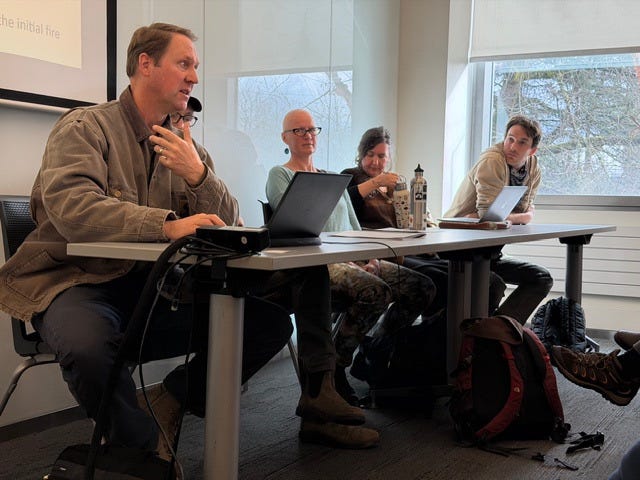
Chad, Alex, Brenna, Paula, and Paul during their PIELC Panel, March 2026
I joined Adam Bronstein (WWP), James Holt (Nez Perce), Jeff Juel (Friends of the Clearwater), and Josh Osher (WWP) for New Direction for Public Lands: Revive the Wild, Rethink the System, Reimagine Our Shared Future, introducing a bold grassroots legislative vision to overhaul public lands law and governance in service of life, not extraction. The conversation is very much ongoing. If you or a group you work with would like to learn more, don’t hesitate to reach out.
But the urgency didn’t stop when the panels did.
We were fortunate to stay within walking distance of campus, which gave us the chance to host colleagues from across the West for evenings of brainstorming, reminiscing, and imagining the future we want to build together. The Pacific Northwest Climate Alliance party was another kind of gift — everyone I wanted to see finally under one roof, no one racing to the next panel. As Margaret Mead put it: “Never doubt that a small group of thoughtful, committed citizens can change the world: indeed, it’s the only thing that ever has.”
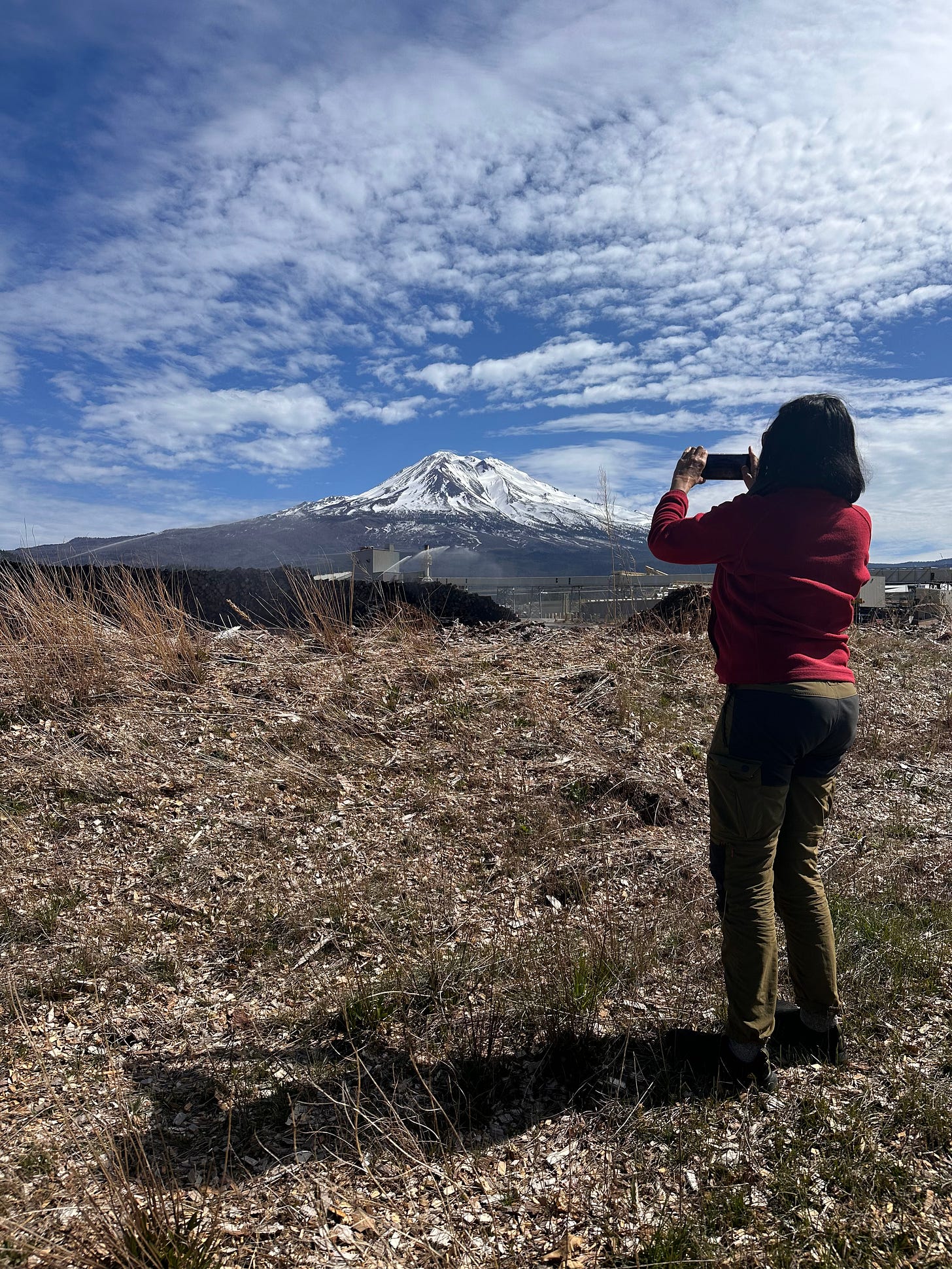
Maya in her element with Mount Shasta in the background, March 2026 © Jennifer Mamola
After being uplifted by the camaraderie of PIELC, my plane descended into D.C. on March 16th to news that the House had just passed the so-called ‘Save (read Sacrifice) Our Sequoias Act’. The SOS Act was passed by voice vote, allowing politicians to avoid accountability for their stance on this unnecessary and destructive logging bill. Shortly after passage in the House, the Senate introduced its companion bill, S. 4103, notwithstanding that new science published in the weeks surrounding the vote confirms the bill’s core assumptions are wrong. A stark reminder that the urgency of this work doesn’t pause for conferences, travel, or apparently the truth.
As warmer weather approaches, and even as Congress pushes forward with the Sacrifice Our Sequoia’s Act and other new logging bills, billions of your federal tax dollars will continue flowing into logging public lands under the false flag of forest “health” and fire safety. We need a fundamental recalibration on this subject. What rarely gets said plainly: mixed-severity fire is natural and necessary in our forest ecosystems, and genuine community protection means investing in the fortification of homes and the human-built communities near fire-adapted public lands, not mechanical logging operations in the forest.
As we continue to fight the relentless extraction machine that is Congress, we will also take time to immerse ourselves in the places we fight to protect. This Memorial Day, we’ll be heading back to the Sequoias with colleagues from PIELC and beyond, to witness firsthand the natural regeneration unfolding where the forest has been left to its own resilience and to keep dreaming and planning together. In the meantime, two things you can do right now: call your senators to oppose S. 4103, and find a post-fire forest that escaped the logging crews — and let it remind you what patience and persistence actually look like.
Want to help us keep organizing, planning, and dreaming together? We know how to stretch a dollar, please consider donating.
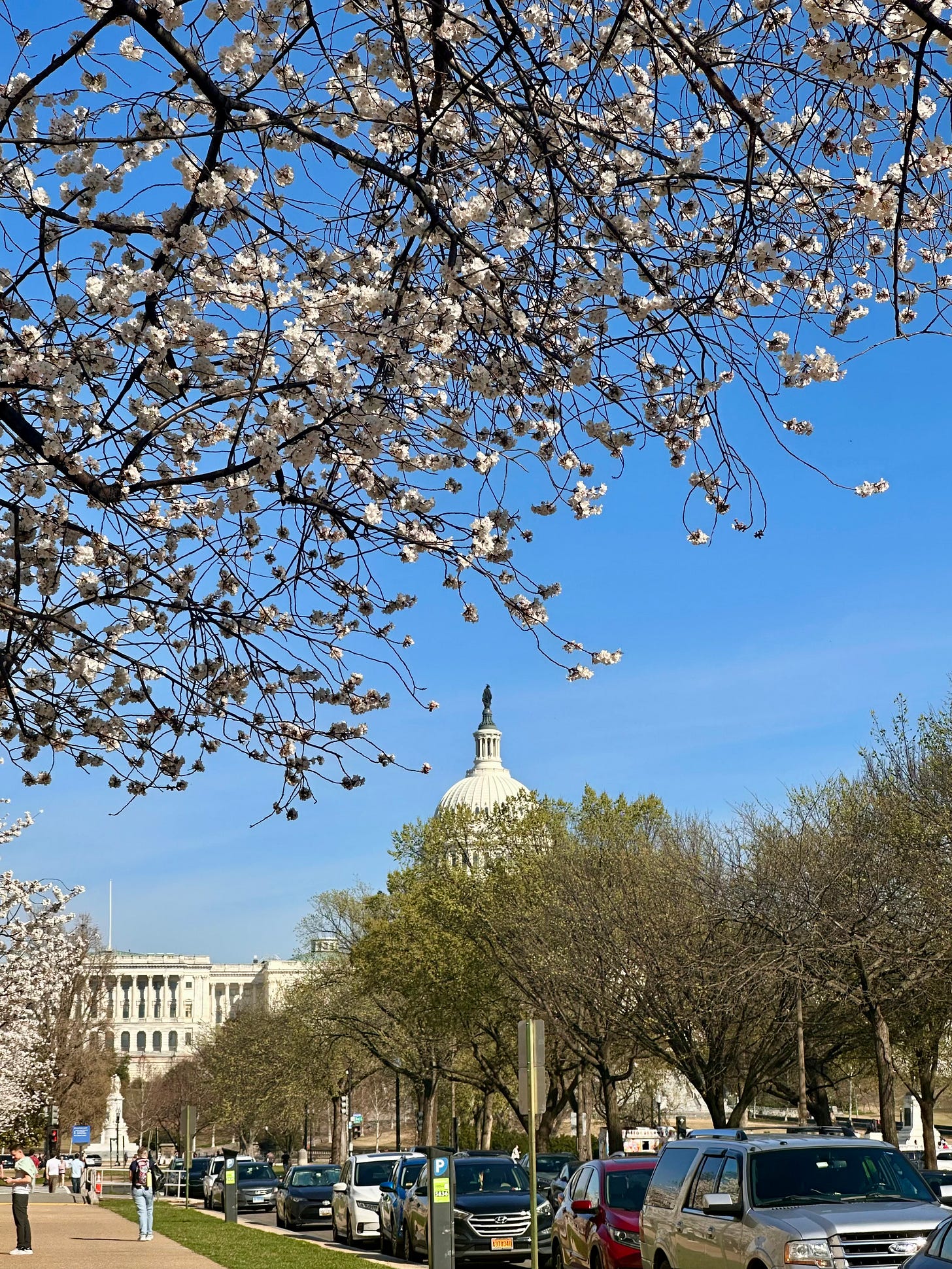
Stunted Spring in the District, March 2026 © Jennifer Mamola