
When Your Backyard Burns
It’s Time to Shift Billions from Backcountry “Fuels Reduction” to Community Protection
Fire has become a large part of my life. I work for a forest and fire science non-profit organization. I enjoy backpacking through snag forest habitats. I spend much of my time thinking about how wildfire shapes forests, shrublands, and other wildlife habitat—and how we can better coexist with it. Wild ecosystems evolved with fire of varying intensities. Low-, moderate-, and high-intensity fire create different habitats and successional conditions across fire-adapted landscapes. It’s well-known that fire is an essential natural process.
But fire has become part of my life in another way, too. Years ago, I evacuated Estes Park, Colorado, during the East Troublesome Fire when it abruptly crossed the Continental Divide and raced toward the community. I remember dark red skies in the middle of the afternoon and sitting in gridlocked evacuation traffic, knowing a fast-moving fire was somewhere behind me. I remember the uncertainty of not knowing what my community would look like when I returned.
Since then, I’ve had numerous occasions when the place I lived was under an evacuation warning or when I closely monitored evacuation maps as fires approached nearby communities. Family and friends have evacuated, too. All of these experiences haven’t made me afraid of wildfire on the landscape though. They’ve made me concerned about whether the communities living alongside it are actually prepared for when it arrives.
There is a particular kind of fear when wildfire reaches a community. You can understand its ecology, celebrate the beautiful role of fire on the landscape, and appreciate the habitat created by fire of different intensities while still feeling your stomach drop when vulnerable homes and lives are in its path. Those ideas are compatible. Wildfire belongs on these landscapes and our communities need to be prepared to coexist with it.
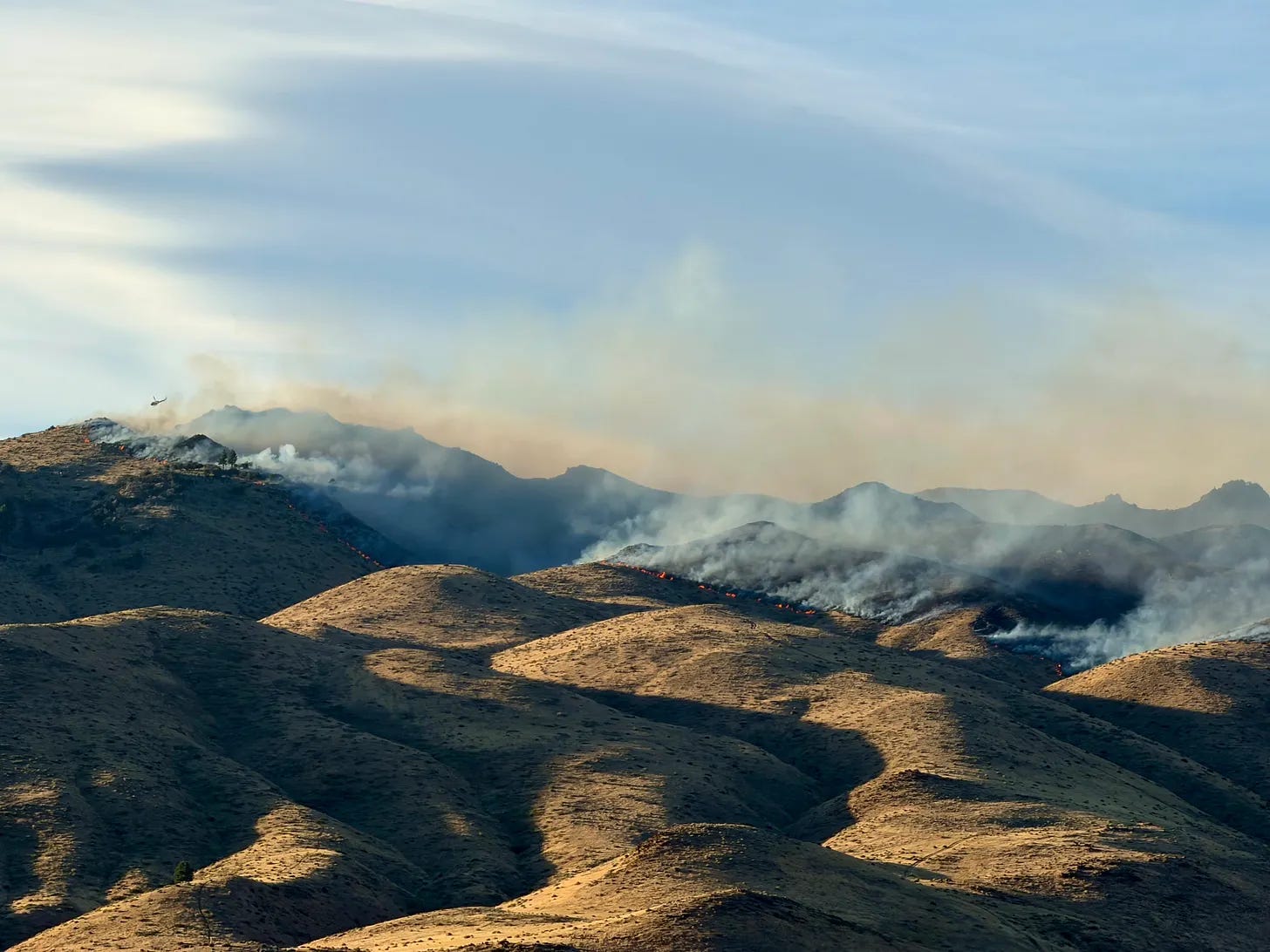
2026 Hawk Fire, Reno, Nevada. Photo © Nicholas Scritchfield
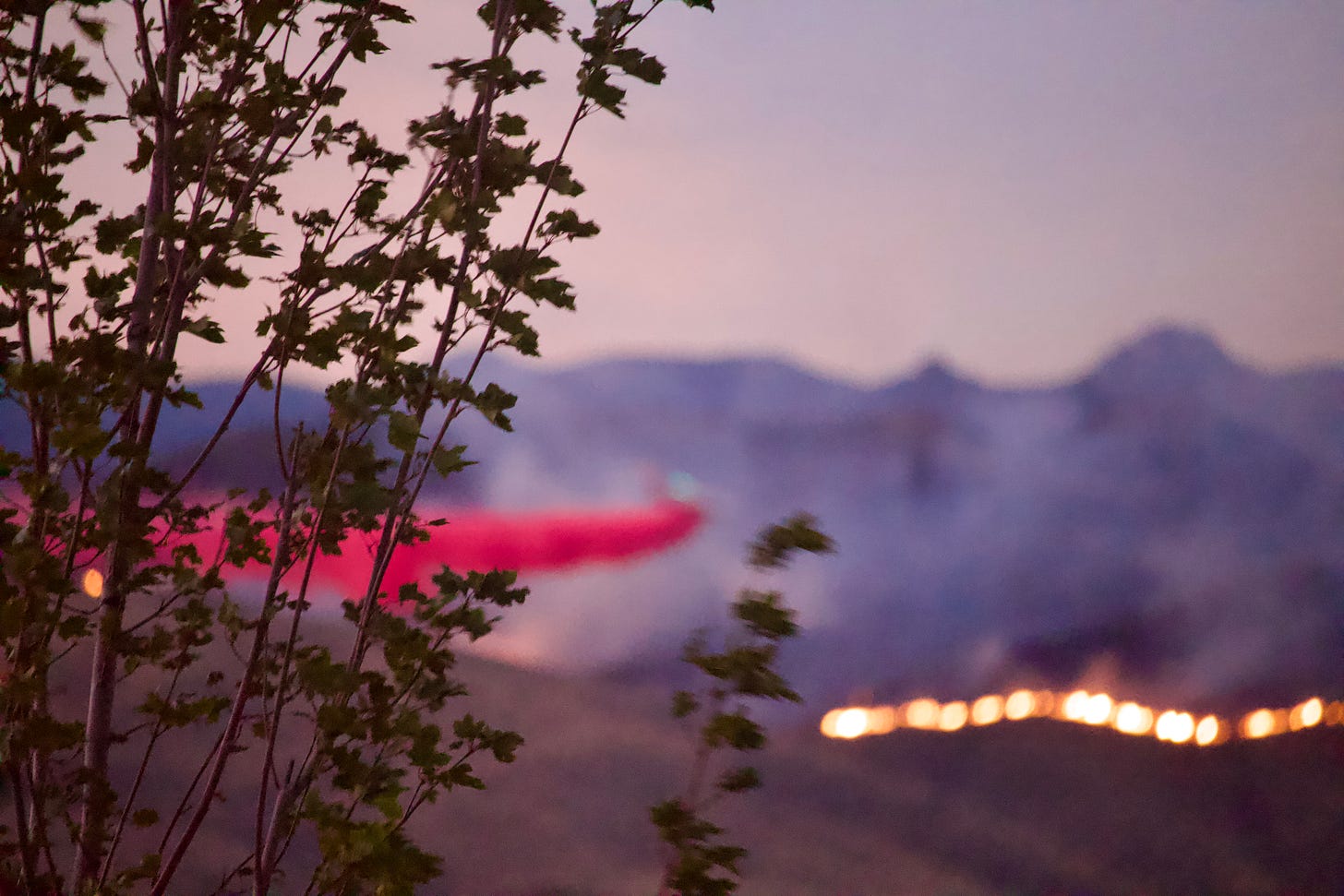
2026 Hawk Fire, Reno, Nevada. Photo © Nicholas Scritchfield
That was what I found myself thinking about again during the Hawk Fire, just days ago. This time, in Reno, the area where I live was placed in an evacuation warning zone. I packed what I could into my vehicle, kept my go-bag ready, and watched the conditions closely. Fortunately, I never had to leave; however, nearly every other house in my area had an evacuate-now order as the fire was quite literally knocking on the doorsteps of my neighbors.
The Hawk Fire started outside Reno under Red Flag conditions and did what wind-driven fires naturally do: it ran, quickly. In less than 12 hours, it grew to more than 13,000 acres and traveled more than seven miles from its point of ignition. Nearly 90,000 people were affected by evacuation orders and warnings. Roads clogged with headlights. Power went out. Major roads closed. Police and first responders did an extraordinary job keeping traffic moving, but gridlock still persisted late into the night as people realized the fire had reached the community edge.
Then homes began to burn. Dozens of homes were lost, but these communities were also fortunate: the winds eventually moderated overnight. Had strong winds continued pushing flames and embers into densely developed neighborhoods, even for just an hour longer, the losses would likely have been far greater. Once multiple structures ignite, fire can propagate through the built environment through embers, radiant heat, and structure-to-structure ignition. A wildland fire can become an urban conflagration. Thankfully, we didn’t find out how bad this one could have become.
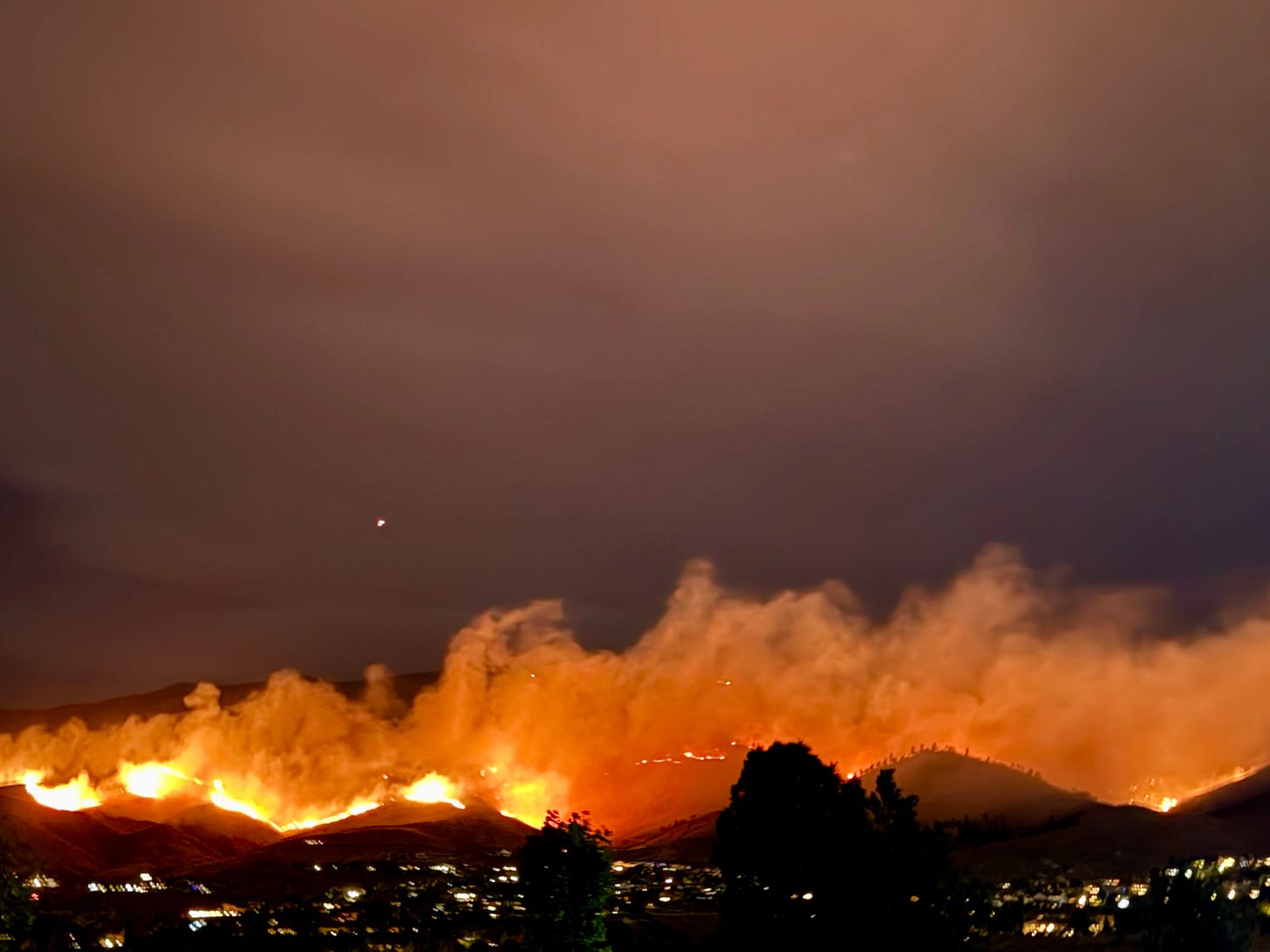
2026 Hawk Fire, Reno, Nevada. Photo © Nicholas Scritchfield
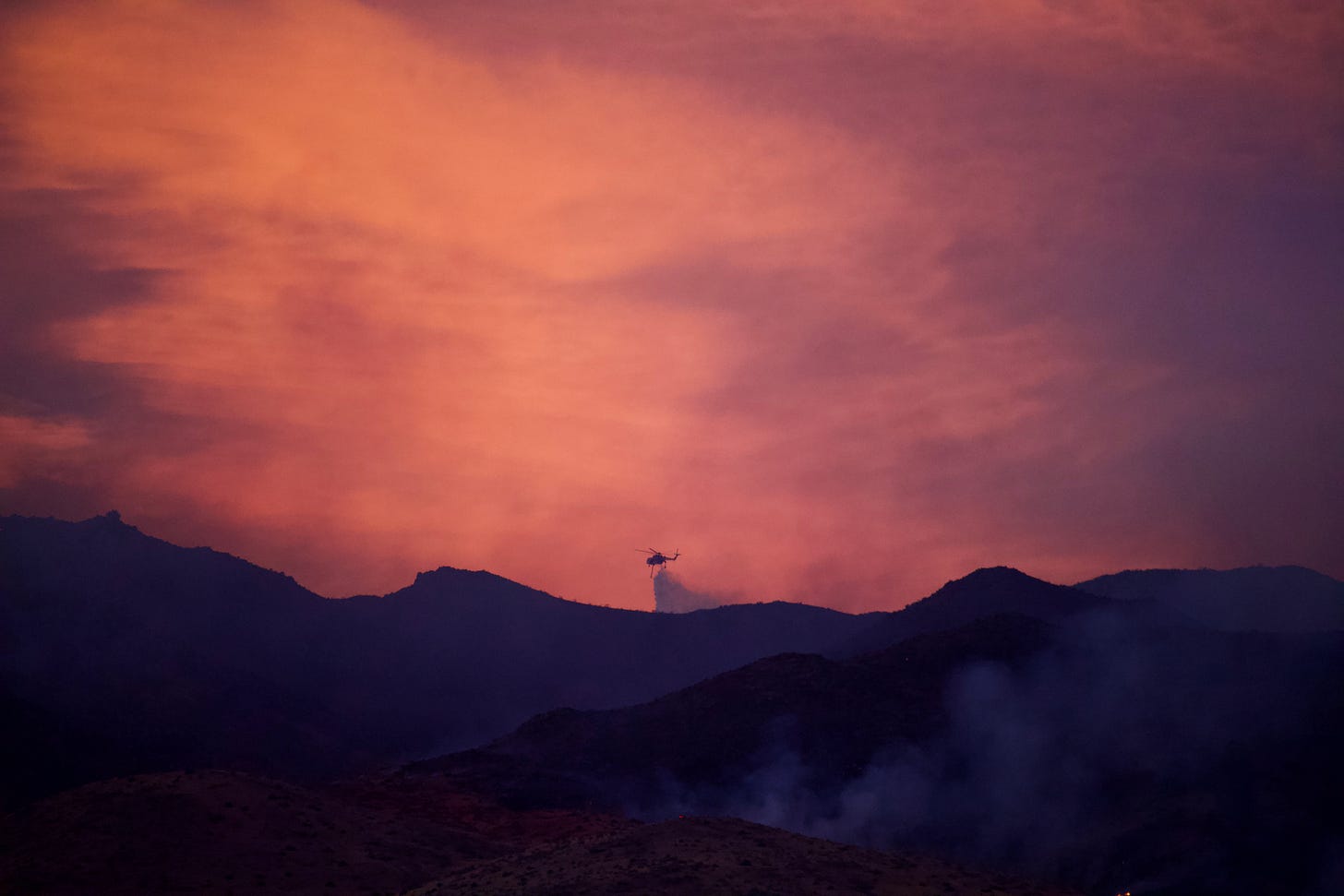
2026 Hawk Fire, Reno, Nevada. Photo © Nicholas Scritchfield
It’s important to remember that even though the weather changed just in time, our vulnerability still needs to be addressed after the fire. Packed and ready to leave, I kept thinking that the problem isn’t that fire moves across these landscapes; it’s that our communities aren’t ready to embrace this rhythm. I stood on my street corner and watched the gridlocked traffic inch forward with flames on the mountainsides behind it. I knew that this fire was a few strong wind gusts away from drifting across the community to my doorstep. And I know this is where our wildfire mitigation money belongs—in our communities.
The Hawk Fire didn’t become dangerous because a distant forest somewhere was “overgrown” and had “too many trees per hectare” compared to an arbitrary point in time. An ignition coincided with dry conditions and an extraordinary window of fire weather—it’s as simple as that. Large-fire years occur when climatic susceptibility aligns with short-lived weather opportunities capable of sustaining rapid fire growth. Firefighters can exploit changes in weather to defend homes, but they can’t turn off the wind.
Yet across the West, enormous sums are spent thinning, masticating, burning, and otherwise manipulating habitat in the name of wildfire mitigation while homes remain vulnerable to well-understood ignition pathways. Apparently, we have money to alter entire landscapes, but making the homes within those landscapes fire-ready is somehow beyond our scope.
I believe the broader scientific evidence weighs strongly against so-called “fuels reduction” in wild ecosystems as an effective strategy for protecting communities, and does not support manipulating wildlands in an attempt to control fire. But you don’t have to agree with me about that to agree about what should come first. Before we keep spending billions to alter forest densities and celebrate the number of backcountry acres logged, let’s prepare our homes.
Decades of research by former U.S. Forest Service fire scientist Dr. Jack Cohen found that home ignition depends principally on the characteristics of the structure and its immediate surroundings. His work shifted attention toward the home ignition zone—within roughly 100 feet of a structure—and making homes compatible with wildfire rather than assuming wildfire must first be prevented from reaching communities.
That means addressing roofs, vents, decks, fences, combustible materials, and the most combustible vegetation around structures, helping people who cannot afford those improvements, and investing in evacuation planning and infrastructure. Extreme conditions may occasionally overwhelm even well-prepared structures but if better preparation saves one more home—or better evacuation planning saves one more life—that is where I want our money going. In reality, there are numerous real-world examples where the vast majority of homes survive wildfires, and everyone safely evacuates, when fire-safe community preparedness is practiced community-wide ahead of time.
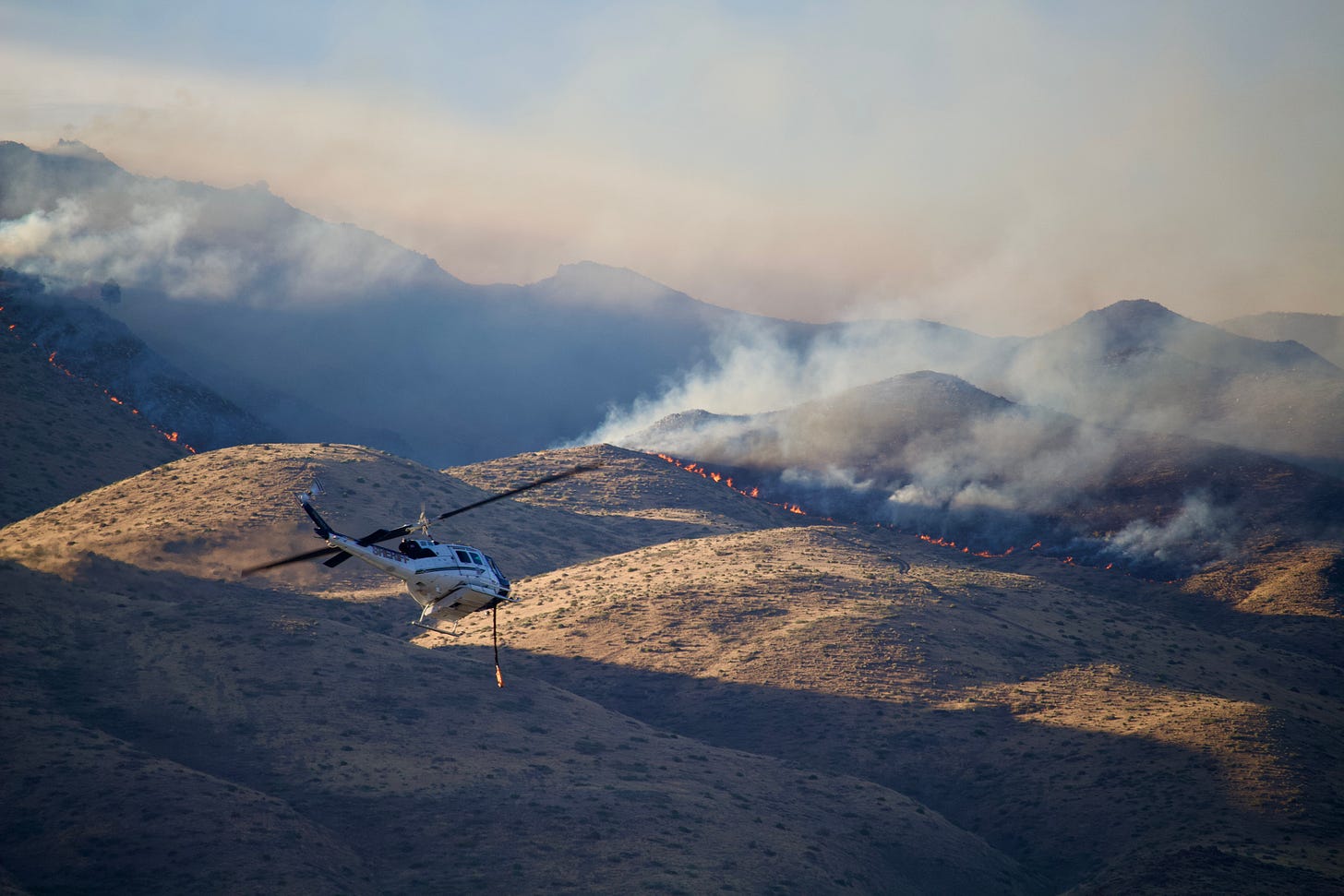
2026 Hawk Fire, Reno, Nevada. Photo © Nicholas Scritchfield
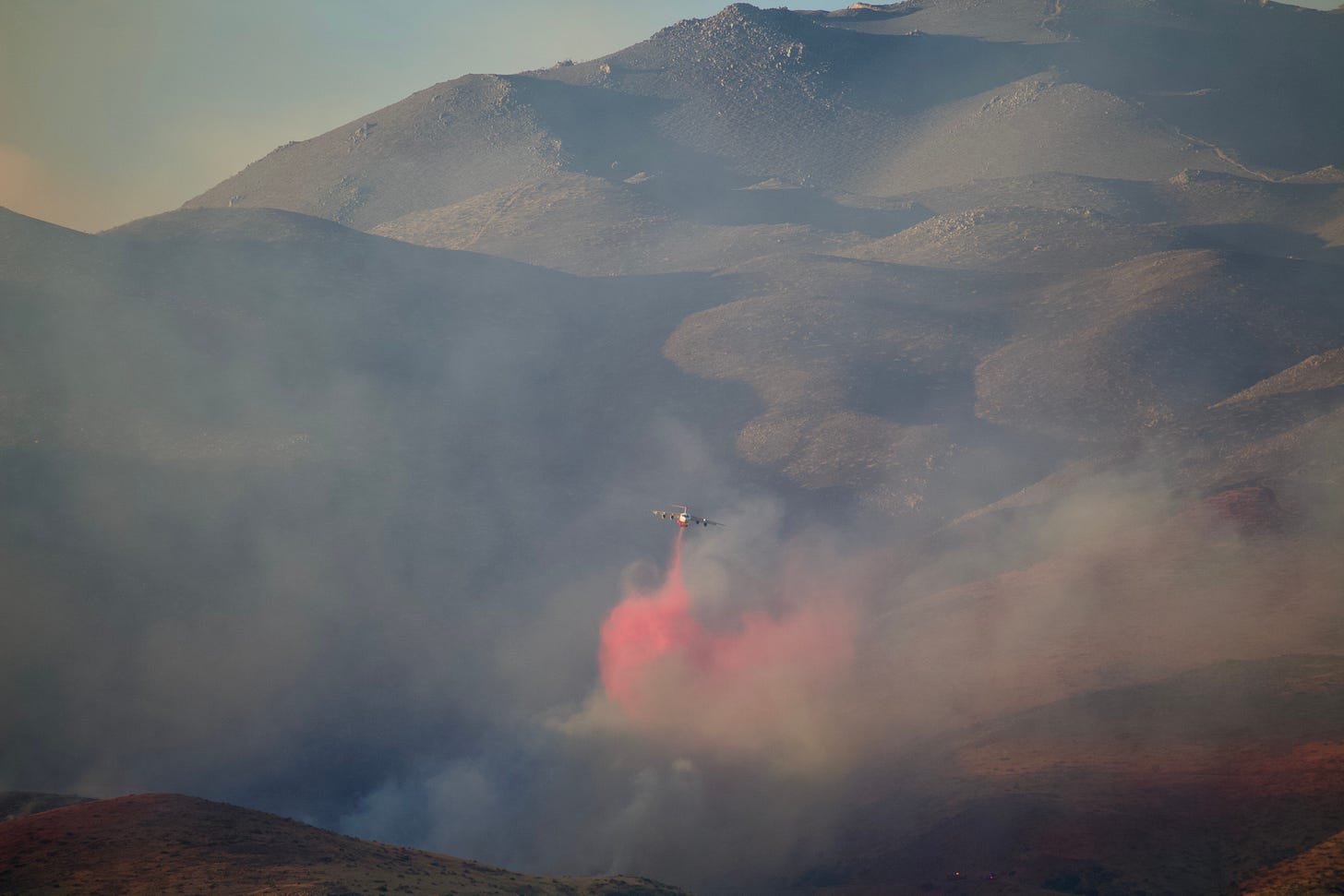
2026 Hawk Fire, Reno, Nevada. Photo © Nicholas Scritchfield
And this isn’t just about fire in Nevada. Reno is one example of a national problem. Across the country, communities remain vulnerable while enormous public investments continue flowing toward an ever-growing landscape-scale vegetation removal and manipulation scheme. We need a national commitment to community protection, starting in the regions facing the greatest wildfire exposure and working through vulnerable communities nationwide. Instead of boasting about acres “treated,” let’s measure something closer to what we supposedly care about: people and homes protected.
The order matters. Wilderness, roadless areas, and remote landscapes do not need to be logged or manipulated to protect homes. Even the Wildland-Urban Interface (“WUI”) has been artificially extended for miles, consuming vital resources far beyond the home ignition zone while the places where homes actually ignite remain severely underfunded. We should agree to finish preparing every single home ignition zone first. Then we can have the backcountry logging debate.
That is my challenge to forest collaboratives and conservation organizations advocating for landscape-scale “fuels reduction,” which often involves intensive logging. Many say they support home hardening and community protection. Great—fund it like you mean it and stop blocking efforts to shift funding to communities. Budgets are better statements of priorities than taglines on websites. If most of your advocacy, funding requests, projects, and political capital are directed toward altering habitat outside home ignition zones, then community protection isn’t actually your first priority. So, let’s agree to make it your top priority.
I think the science weighs heavily against tree cutting and vegetation manipulation as fuels reduction from every angle. You may disagree. Fine, we can debate that later. First, fully fund the thing that decades of home-ignition science already tells us directly addresses whether homes burn.
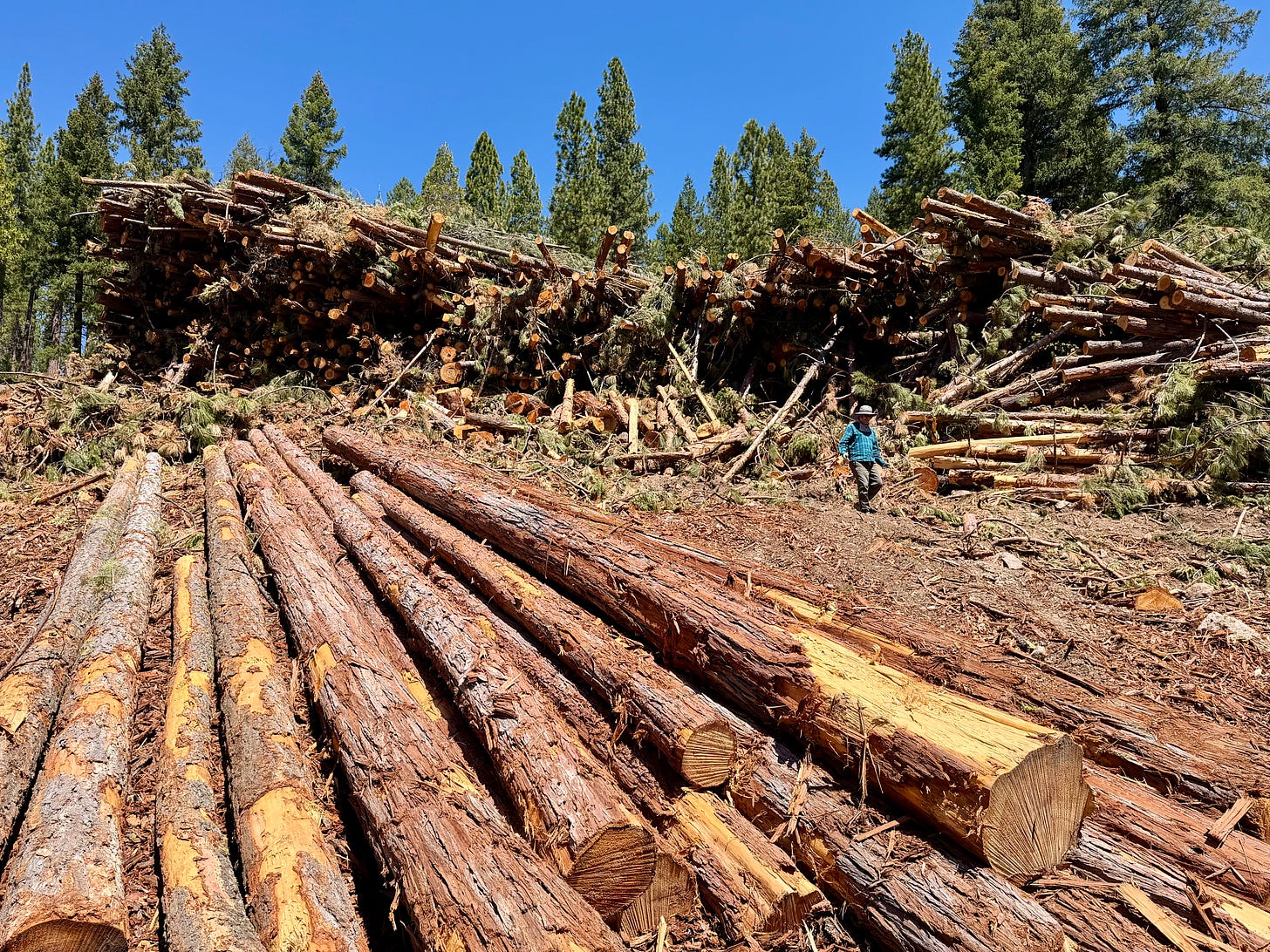
Landscape-Scale Forest Manipulation Project, Quincy, California, April 2026. Photo © Nicholas Scritchfield
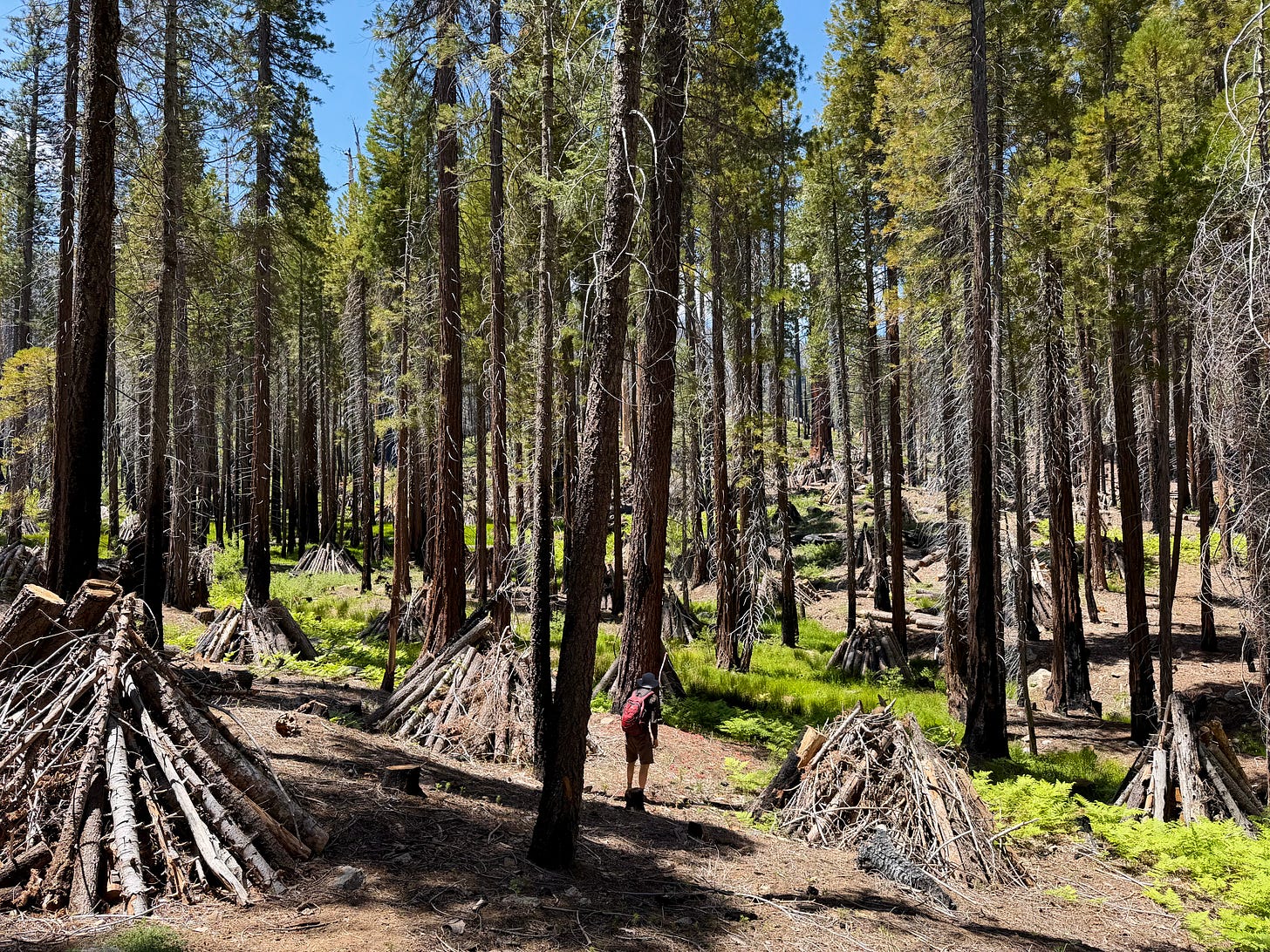
Post-Fire Forest Manipulation Project, Freeman Creek Grove, California, May 2026. Photo © Nicholas Scritchfield
When the evacuation orders are lifted, numerous families affected by the Hawk Fire won’t be returning home. Their houses are gone, their memories are lost, and we definitely cannot say that this happened after we had already done everything reasonably possible to prepare every vulnerable home and neighborhood—we haven’t.
We know that some homes may burn regardless. There will always be extreme conditions capable of overwhelming some mitigation efforts. But until we can stand after a fire and say we did everything in our power to prepare those families before the flames arrived, it’s not justifiable to put community protection behind any multi-billion-dollar landscape manipulation scheme.
I accept the responsibility that comes with living with fire, but living in wildfire country is not a special lifestyle choice for millions of people—it is simply where home is—and coexistence creates responsibilities for us, not a requirement to endlessly alter the wild ecosystems around us.
That is why I support bills like the Community Protection and Wildfire Resilience Act (H.R. 582(opens in new tab) and S. 3609(opens in new tab)), and why I’m asking conservation organizations, forest collaboratives, agencies, and elected officials to shift wildfire mitigation funding toward the place that has the greatest effectiveness, the home ignition zone. This time, I got to unpack and stay home, but dozens of families will not have a home to return to as the smoke settles after the Hawk Fire. That difference makes the priority mismatch painfully clear.
We simply can’t—nor should we be trying to—eliminate wildfire from a fire-prone and fire-adapted continent. Fire of all intensities belongs here. Our communities do, too. Coexistence means accepting both realities and putting our resources where they will directly protect human lives and homes. As a result of this reprioritization of funds, the best available forest and fire science tells us that we would also be protecting ecosystem integrity by showing wild areas the restraint they need to naturally respond to fire on their own terms.
After every vulnerable community has been given the resources to become as fire-ready as possible we can debate our funding priorities. But until then, let’s support our neighbors, harden our homes, prepare our communities to coexist with fire, save our bickering about the nuances of forest structures on some far-off mountainside for the future, and shift our focus and funding to the places that matter most—the people and homes in our communities.