
“Boiling Point”: How a Prominent Climate Podcast is Being Used as a Forum for Climate Greenwashing and Methodological Manipulations
Written by Dr. Chad Hanson.
[Author’s Note: From the outset here, I’ll acknowledge that this article is arguably a bit long. However, if you care about forests, climate change, and scientific integrity, as I do, then I encourage you to read it, completely. Because you are being lied to, and I think you should know how, why, and by whom.]
The new climate change deniers aren’t who you may think they are. They aren’t popping off about how climate change is a hoax. They aren’t ignorant, or obvious. They are smart, educated, and persuasive—at least on the surface. Their modus operandi isn’t to tell you that climate change isn’t real, or that it isn’t caused by human consumption patterns. No. What they do is far more insidious, and vastly more dangerous and dishonest. They correctly tell you that climate change is real, and that the climate crisis is urgent, but then manipulate facts and evidence to greenwash logging and wood consumption patterns that have played a significant role in causing the climate crisis, while simultaneously encouraging an increase in those consumption patterns. In essence, they admit climate change is real, but deny the climate consequences of logging, or even attempt to spin logging as a climate solution. This matters because, at this stage, it is not possible to overcome the most severe upcoming impacts of the climate crisis solely by shifting away from consumption of fossil fuels. We must also, with equal vigor, increase protections of our best carbon sinks, especially forests, to draw down the dangerous excess of CO2 in our atmosphere. In other words, we must keep the carbon in the ground, and keep it in the forest. If you doubt this, read my book, “Smokescreen: Debunking Wildfire Myths to Save Our Forests and Our Climate”.
Fundamentally, these new climate change deniers are acting as mouthpieces for powerful economic and political interests—many in the Republican Party and far too many in the pro-corporate Democratic Party establishment. Some of them do it knowingly, generally for money, while others have simply been misled.
One notable example of this climate greenwashing is the prominent climate change podcast, “Boiling Point”, a venture of the Los Angeles Times. To be clear, like all large organizations, the L.A. Times is many things. The Times has done quite a bit of outstanding reporting on the environment, including forests and climate change. But Boiling Point is an exception to this.
The most recent Boiling Point episode, “The Myth of Forest Management”, was done jointly with another climate change podcast, Heated. While Emily Atkin from Heated attempted to be fair and balanced, Miranda Green from Boiling Point largely hi-jacked the podcast episode, inserting quotes from a scientist aligned with logging interests, Hugh Safford, to attack points I made in my interview, without informing me or giving me an opportunity to reply. The result was that Boiling Point used the episode as a platform to basically call me names, quoting some unnamed “scientist” as saying, “F*** that guy”, followed by a few other bits of vitriol. Ms. Green unleashed this barrage of ad hominem attacks specifically after I made the point that denser forests burn less intensely in wildfires than more open forests, and that mechanical “thinning” and other logging operations tend to intensify wildfire behavior and rate of spread.
What was going on there? Was this a spirited debate about interpretation of scientific evidence or methods? Not even a little bit. Not one substantive point or methodological issue was raised in these attacks. Not one. And here’s the really weird thing. In the interview, I was very specifically talking about numerous peer-reviewed scientific studies published by other scientists who have reported that the densest forests have the lowest wildfire intensities and that “thinning” and other logging exacerbate wildfires—mostly research from scientists with federal agencies and universities who have no affiliation with me. I have published many studies on these topics too, but I wasn’t even discussing my own research. So, why the concerted effort to silence or sideline me for talking about this? Clearly I touched a nerve. What followed this moment in the podcast episode was a series of comments and arguments by Miranda Green and Hugh Safford attempting to justify and promote logging—especially logging on public lands like National Forests—as a means to supposedly curb wildfires and “restore” forests. Since I was not given the standard opportunity to respond to Hugh or Miranda before the podcast ran, I’ll spend some time here debunking the disinformation and climate greenwashing promoted by Miranda Green and Hugh Safford on the recent Boiling Point podcast episode, “The Myth of Forest Management”.
Most critically, all content about the climate change impacts of “thinning” and other logging was omitted from the episode—in a podcast about climate change. Listeners did not get to hear about the numerous studies finding that “thinning” emits several times more CO2 per acre than wildfire alone, or that the overwhelming majority of scientific research finds that wildfires are driven mainly by weather and climate factors, and climate change—things that can’t be addressed with chainsaws and logging machinery. This should have been the core focus of a podcast ostensibly devoted to climate solutions.
To put this into perspective, it’s necessary to understand the very different effects of forest fires and mechanical “thinning” (logging) on forest carbon, and CO2 emissions. My colleagues and I spent four and a half years doing detailed and painstaking field work in forest fire areas to find out the percentage of tree carbon that is consumed and in large wildfires. In 2022 we published our findings, resulting from the largest and most comprehensive field-based study ever done on this subject. We found that even the largest and most intense forest fires only consume an average of 1.2% of tree carbon, a finding that is uncontested in the scientific literature. That’s it—just over 1%. In stark contrast, logging conducted under the rubric of “thinning” removes 30% to 50% of tree carbon, and most of this is emitted into the atmosphere almost immediately, since the majority of trees removed from forests are not useable for dimensional lumber or other wood products. The branches, tree tops, bark, round parts, and mill residues are burned for dirty energy, called “biomass energy”, which emits about 50% more CO2 than burning coal, for equal energy produced. The entirety of small/medium-sized trees—generally those less than 14 inches in diameter—are burned for biomass energy production. Post-fire clearcut logging is also 100% for biomass energy production in many cases these days, which we call “clearcuts for kilowatts”. What’s more, the damage done to forest soils by heavy logging machinery reduces forest productivity, i.e., carbon sequestration potential, by more than 30%, as over 200 climate scientists and ecologists, including me, recently noted.
Logging, regardless of the deceptive euphemisms used to spin it (“thinning”, “forest health”, “restoration”, “fuel reduction”), is a climate change nightmare. This is the true face of logging in the 21st century: treating trees like giant sticks of coal for dirty, climate-polluting energy. It’s also an environmental justice nightmare. Burning fossil fuels produces dangerous levels of toxic and particulate emissions, and burning trees or portions of trees for energy is even worse. What’s more, the logging industry disproportionately locates its dirty energy facilities in lower-income communities and communities of color. But Boiling Point, in its gleeful promotion of logging, is apparently unconcerned with the fact that logging makes climate change worse, or the environmental racism associated with it.
Boiling Point’s Miranda Green also dug up a comment from a 2021 hit-piece article published by a pro-logging newspaper, claiming that 41 studies by a total of 111 scientists have supposedly “made the case for more forest thinning, and in the process ripped Hanson and his allies’ methods and results”, based on a comment from one of the Forest Service-funded scientists, Keala Hagmann. This comment was deeply dishonest and misleading (and, again, I was given no opportunity by Miranda Green to respond to it—she never even contacted me). First, the 41 studies in question are from Tables 3 through 6 of Hagmann et al. (2021), according to the lead author of that article (I sent her an email and she confirmed this), and not one of them pertains to thinning and wildfire intensity—not one. Second, most of the 41 studies in question did not pertain to my research or even reference or discuss my research. Third, many of the 41 studies did not even reference or discuss the research of colleagues of mine. Fourth, with regard to the portion of the 41 studies that did criticize my research, or the research of one or more of my colleagues, Miranda Green neglected to mention that, in every single case, my colleagues and I published rebuttal articles pointing out that the criticisms did not even challenge or question any of our central findings. Instead, the criticisms merely made tangential, fly-specking comments that we either acknowledged were fair (though minor) points, which did not alter our basic results or conclusions, or which we soundly refuted. Fifth, not one of the many, many rebuttal articles that I and/or my colleagues published in peer-reviewed scientific journals, in response to these critiques, was included or mentioned in the Hagmann et al. (2021) article, or by Miranda Green. In other words, by omitting any mention of our rebuttal articles, Hagmann et al. (2021) created the false impression that their critiques were the final word when, in fact, our rebuttals completely, utterly, and definitively addressed and refuted those critiques in every case, with no further comebacks from the critics about our methods, results, or conclusions. In 2023, my colleagues and I published a peer-reviewed study that comprehensively documented the enormous body of scientific evidence omitted by Hagmann et al. (2021) and a couple of other Forest Service-funded studies. We concluded, in Baker et al. (2023), that this pervasive pattern of scientific omissions represented a “falsification of the scientific record”, a finding and conclusion that remains uncontested in the peer-reviewed scientific literature. Notably, the deceptive and fraudulent Hagmann et al. (2021) article was co-authored by Hugh Safford.
In the course of promoting logging, Miranda Green allowed Hugh Safford to tout two of his recent studies. Both of these studies are prime examples of the ways in which compromised scientists, who have a conflict of interest due to affiliations and funding associated with logging, will often manipulate methods to push their agenda, or will in some cases even make pro-logging conclusions that are directly contradicted by the results of their own studies. In the first of these studies, Safford and Saberi (2026), the authors claimed that mechanical “thinning” was effective at protecting forest trees from the Caldor fire of 2021 near Lake Tahoe, and used this conclusion to promote more funding to subsidize expanded logging on public lands. However, the study’s results actually point to the opposite conclusion.
The study’s narrative is that “thinned” forests had a lower percentage of trees killed by the Caldor fire. But Table 1b of the study shows that the thinning logging operations conducted by the Forest Service killed and removed over two-thirds of the trees before the Caldor fire occurred, including some larger, mature trees but, numerically, mostly saplings and other very small trees. What remained were larger trees that more often survive fires. Safford and Saberi (2026) omitted the thousands of trees killed by thinning from their analysis of tree mortality—a deceptive tactic typical of thinning studies from scientists funded by entities financially involved in logging, such as the U.S. Forest Service. This sleight of hand was the basis for the authors’ false narrative that thinning was effective at protecting forest trees from the fire. In the unthinned forests, the dense areas of conifer saplings remained, and most of these small trees are killed even in creeping, low-intensity surface fires. This deception allowed Safford and Saberi (2026) to misleading claim that a higher percentage of the trees in unthinned forests were killed, and that trees in unthinned forests had higher levels of crown scorch and crown torch. Of course they did, since even low-intensity fire will completely scorch or torch the numerically-dominant saplings that remained in the understory of the unthinned forest, and are close to the ground. Such trees did not generally get scorched or torched in the Caldor fire in the thinned forests for the simple reason that they had been mostly removed before the fire got there. Safford and Saberi (2026) used this trick to imply that the Caldor fire burned more intensely in the unthinned forests, which were much denser. But Safford and Saberi (2026)’s own results show this was not true. Figure 4 of that study shows that the height of the flames, and the killing of foliage due to flames, in meters, were generally higher in the thinned forests, indicating higher fire intensity in thinned forests.
Why is this? It’s pretty simple, actually. The largest and most comprehensive scientific studies—the ones that analyze dozens or hundreds of wildfires across large regions and many years—generally find that the densest forests have lower intensities in wildfires, due to the cooler, shadier, more humid, and less windy microclimate in denser forests. Safford admitted this is true in wetter forests, but claimed, without citing any evidence, that this principle does not apply to dry forests, such as ponderosa pine and dry mixed-conifer forests. However, as Hugh Safford knows quite well, there are stacks of studies in dry forests finding that denser forests burn less intensely in wildfires. Many of these studies are cited and described in fact sheets on John Muir Project’s website, including the “Thinning and Fire” fact sheet and the “Myth of Overgrown Forests” fact sheet. Check them out, and see for yourself what Boiling Point and Hugh Safford don’t want you to know. One such large wildfire study, Lesmeister et al. (2019), which was authored by the U.S. Forest Service’s own scientists, found that denser dry forests with high canopy cover “buffer the negative effects of climate change” when wildfires occur. The authors noted that forest “thinning” undermines this important climate buffer, stating the following:
“Thinned forests have more open conditions, which are associated with higher temperatures, lower relative humidity, higher wind speeds, and increasing fire intensity. Furthermore, live and dead fuels in young forest or thinned stands with dense saplings or shrub understory will be drier, making ignition and high heat more likely, and the rate of spread higher because of the relative lack of wind breaks provided by closed canopies with large trees.”
In an even larger study in dry forests by these Forest Service scientists, Lesmeister et al. (2021), which included 472 wildfires over three decades, the authors found that more open forests with lower biomass had higher fire severity, because the type of open, lower-biomass forests resulting from thinning and other logging activities have “hotter, drier, and windier microclimates, and those conditions decrease dramatically over relatively short distances into the interior of older forests with multi-layer canopies and high tree density…”
Similarly, Lydersen et al. (2014), in the ponderosa pine and mixed-conifer forests of the Sierra Nevada, found that the densest forests with the highest numbers of small and medium-sized trees had the lowest fire severity. In 2018, my colleagues and I analyzed 1500 wildfires in dry forests across the entire western U.S., over the span of three decades. In Bradley et al. (2016), we found that the dry forests with complete protection from logging, which tend to be the densest and most carbon-rich, had the lowest levels of wildfire intensity, while forests with fewer, or few, environmental protections, and substantial logging (e.g., mechanical “thinning”, post-fire logging, etc.) had the highest wildfire intensity.
Moreover, when trees are removed from forests, winds sweep through forests much faster, driving flames to spread far more rapidly, according to multiple studies from the Forest Service’s own scientists. This means that, after so-called “thinning”, fires will reach communities more quickly, giving people and their animals less time to safely evacuate, and first responders less time to arrive and help. We have already seen the tragic real-world results of this: in the Camp fire of 2018, which burned fast and hot through heavily “thinned” and post-fire logged forests (where logging had been conducted under the guise of “fuel reduction” and “fuelbreaks”) and destroyed the towns of Paradise and Concow, killing 85 people and destroying over 14,000 homes; in the Caldor fire of 2021, which burned at high-intensity through numerous “thinned” forests and destroyed the town of Grizzly Flats; in the Dixie fire of 2021, which raced intensely through vast areas of “thinned” forests and post-fire logging from earlier fires, before destroying Greenville and Canyondam; and many others.
Heedless of the weight of scientific evidence, the narrative spun by Hugh Safford, and Miranda Green by extension, was that current forests are far too dense, and overgrown, and are supposedly burning too intensely as a result. Totally aside from the huge body of scientific evidence finding that the densest forests tend to burn at lower intensities, they are also being misleading about the historical evidence regarding forest density. About 15 years ago, some Forest Service-funded scientists published research claiming that historical Sierra Nevada mixed-conifer and ponderosa pine forests had very low tree densities, only about 20 to 30 per acre, based on old U.S. Forest Service forest surveys conducted around 1911 in unlogged forests, prior to fire suppression. I reached out to the authors of the study, asking them to send me their raw data (it is standard practice among scientists to openly make data available once studies are published, so that other researchers can verify results and conclusions). They refused. So my colleagues and I went to the National Archives in San Bruno, California, where the original forest survey records were kept, and went through the certification process to handle and copy these historical documents. We found that the Forest Service-funded scientists had cherry-picked the data, excluding 94% of the historical forest records, without mentioning that exclusion in their study. They excluded records documenting the existence of far denser forests, and excluded 100% of the historical records regarding the density of small trees. Over the following years, my colleagues and I assembled and published all of the historical forest survey data that the agency-funded scientists had omitted, and we found that historical mixed-conifer forests were 7 times denser in terms of trees per acre than previously claimed, and historical ponderosa pine forests were 17 times denser than previously claimed. This finding is also uncontested in the peer-reviewed scientific literature.
Similarly misleading and false was the suggestion by Hugh Safford and Miranda Green that it is necessary to remove trees from forests before burning can be done. This is blatantly false. There is quite literally half a century of scientific studies documenting that fire can easily be restored to forests without removing any trees, including in the very densest forests, in forests that haven’t burned in over a century, and in forests with high levels of dead trees and downed wood. Even the U.S. Forest Service admits this (see John Muir Project’s “Fire Alone” fact sheet on this issue for citations and descriptions). That’s because it’s overwhelmingly about the weather. If land managers desire to have lower-intensity fire, they simply allow or conduct burning in mild fire weather. This applies to managed wildfire (allowing lightning strikes to burn for forest and habitat benefits), prescribed fires, and Indigenous cultural burning, all of which have an important role, but none of which require logging. Previous fire will moderate subsequent fire for a certain period of time, usually a few to several years, but that’s about consumption of twigs, dry leaves, and pine needles on the forest floor, and has nothing to do with tree removal. The entire narrative that forests must first be thinned before they can be burned is nothing more than a self-serving scam being run by logging interests and the scientists and politicians they pay to parrot their messages.
Safford also attempted to downplay the extensive logging of mature and old-growth trees happening currently on National Forests through the federal timber sales program, implying that this only occurs when the occasional bad-actor contractor takes some big trees without authorization. This is another blatant falsehood. Anyone can go on the website of any particular National Forest in the Sierra Nevada, or Oregon and Washington, or Montana and Idaho, and go to the “Projects” webpage to see that Safford’s claim is false. Pick several so-called “forest health”, “thinning”, “fuel reduction”, or “restoration” projects at random and download the Environmental Assessments to see what the proposed actions actually entail. In National Forests of the Sierra Nevada, for example, the largest (by acreage) projects, which make up the vast majority of the total area proposed for some form of “thinning”, consistently allow logging of mature and old-growth trees up to 30 or 40 inches in diameter—trees that would take two people to reach around and touch fingertips. When it comes to post-fire logging, there is no diameter limit whatsoever.
The second study that was promoted by Safford on Boiling Point was Safford and Stewart (2026), which Safford used on the podcast to suggest that large areas of forest are not naturally regenerating after wildfires (and, therefore, fires must be curbed and, therefore, we must do more logging supposedly to curb fires, etc., etc.). In terms of deceptive methodologies, this one is a real whopper. Specifically, the Safford and Stewart (2026) study claimed that an average of more than 200,000 acres are being “deforested” by wildfires per year in California. But the study used an administrative (political) definition of “deforested”, which includes forests with as little as 50% tree mortality from wildfire. So, if a given stand had 200 trees per acre, and fire killed half, leaving 100 live trees per acre, this was deceptively defined as “deforested”. The study upon which this deceptive model was based, Welch et al. (2016), admitted that these areas, which Safford and Stewart (2026) misleading claim are “deforested”, had an average of 707 conifer seedlings and saplings naturally regenerating per acre after wildfires. That’s a long way off from “deforested”.
Last, Miranda Green and Hugh Safford repeatedly demonized high-intensity fire patches, and talked about them as if they are an example of destruction or damage—something that must be prevented. Trying to stop or prevent high-intensity fire patches, or large fires, is a wildly outdated and misplaced goal, ecologically, as there are now several hundred scientific studies finding that many native plant and animal species not only benefit from the unique “snag forest habitat” created by high-intensity fire, but many of them primarily depend on it, including numerous woodpeckers and other cavity-nesting species that depend on patches of standing dead trees for homes and food (e.g., food in the form of native insects that depend recently-dead or dying trees to reproduce), as well as many shrub-nesting birds and small and large mammals that depend on the native fire-following shrubs, and downed logs. In fact, snag forest habitat, more technically known as “complex early seral forest”, is comparable to old-growth forest in terms of native biodiversity and wildlife abundance. It’s not damage or loss, it’s an ecological treasure. Read the “Mixed-Severity Fires: Nature’s Phoenix” and “Smokescreen” books for a detailed description of this and hundreds of citations to scientific studies on this point.
Near the end of the podcast, Miranda Green was trying to find nice and supportive things to say about a notoriously anti-environmental and deceptively-named logging bill called the “Fix Our Forests Act”, which, if passed, would override environmental laws to allow an unlimited number of logging projects up to 10,000 acres in size each to occur on National Forests with little or no public notice or comment, or environmental analysis. This logging bill, sponsored by Senator John Curtis (R-UT) and Alex Padilla (D-CA), also contains a hidden loophole that would make it impossible to enforce any federal environmental laws on National Forests. There are no diameter limits, so old-growth trees and forests would be logged. There are no limits on the proportion of trees that could be removed, so public forests would be clearcut. Massive amounts of carbon would be removed from the last best places on our National Forests, and most of it would quickly go into the atmosphere, worsening the climate crisis at a time when we absolutely cannot afford to make it worse. But that doesn’t seem to bother Boiling Point. Welcome to the world of climate greenwashing.
Chad Hanson is a wildfire scientist with the John Muir Project (www.johnmuirproject.org) and is the author of the book, “Smokescreen: Debunking Wildfire Myths to Save Our Forests and Our Climate”.
Take Action: Please call your U.S. Senators (Capitol Switchboard: 202-224-3121) and urge them to oppose any attempts to pass deceptively-named logging bills like the “Fix Our Forests Act” (S. 1462) or the “Save Our Sequoias Act” (S. 4103), and tell them to oppose any cynical attempts to add any provisions from these logging bills to must-pass legislation like the Farm Bill Reauthorization or the National Defense Authorization Act.
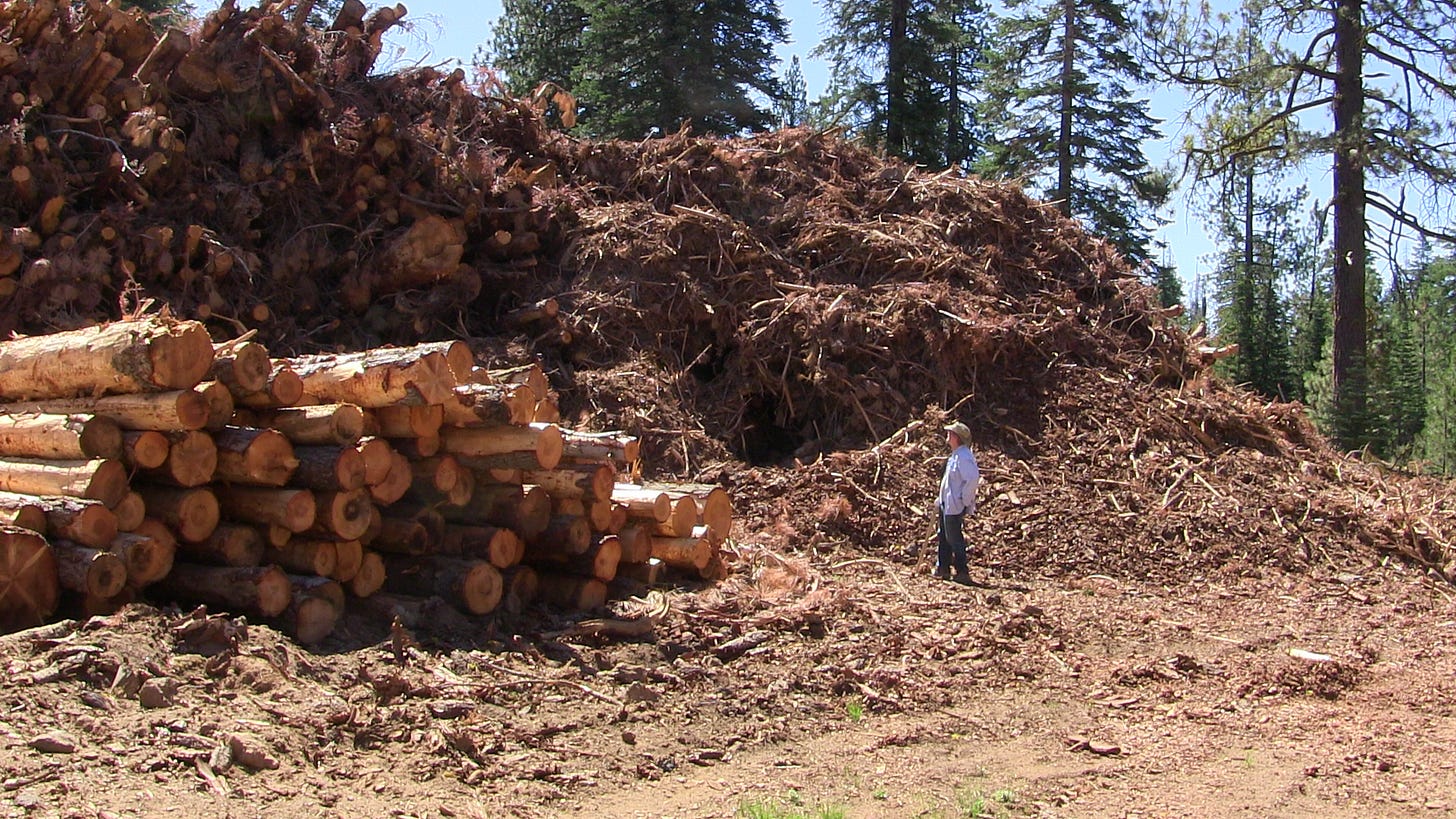
Logging in Lassen National Forest, Summer 2026
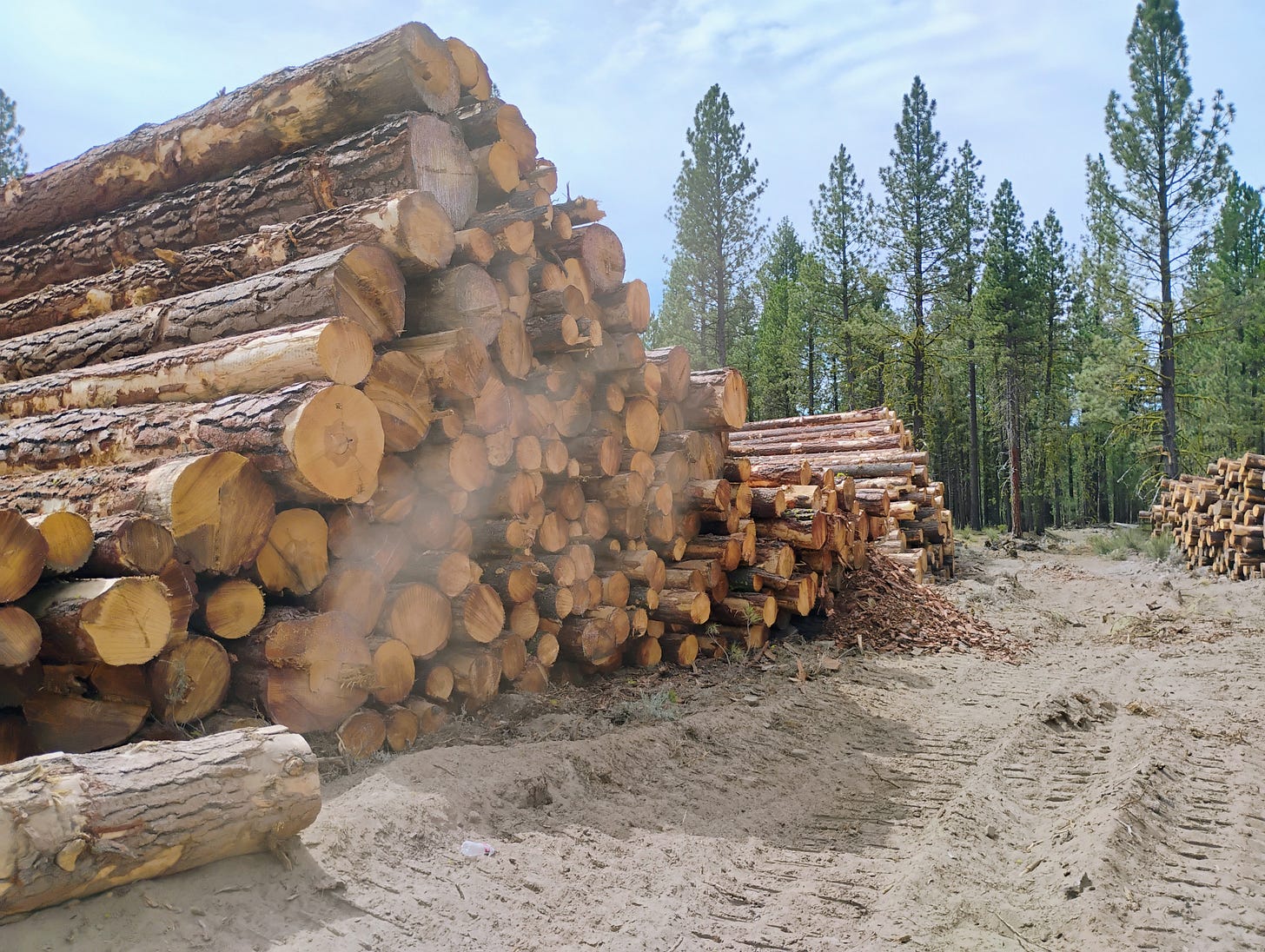
Logging in Lassen National Forest, Summer 2026
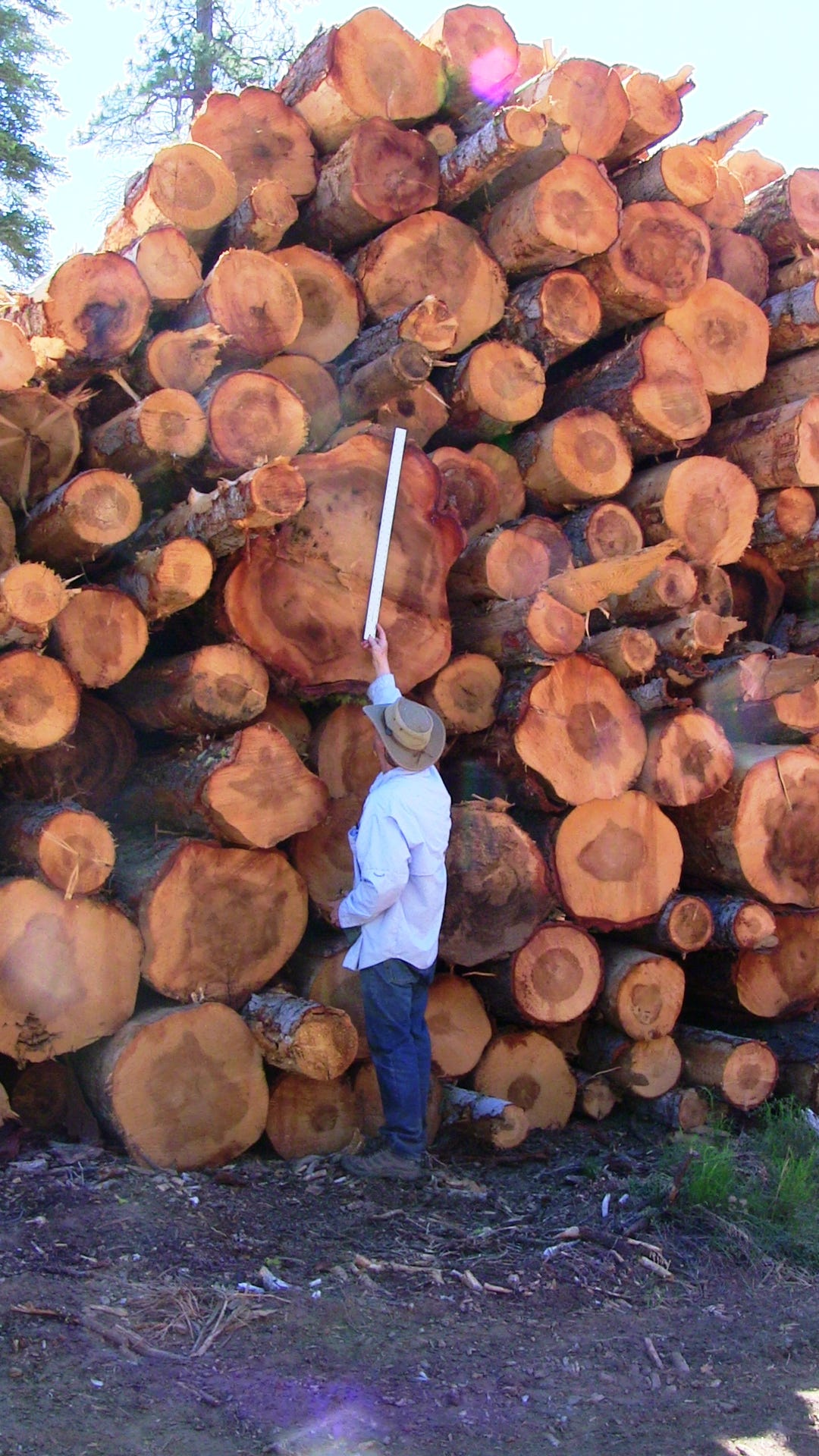
Logging in Lassen National Forest, Summer 2026, 25 landings/multiple piles in 12 miles
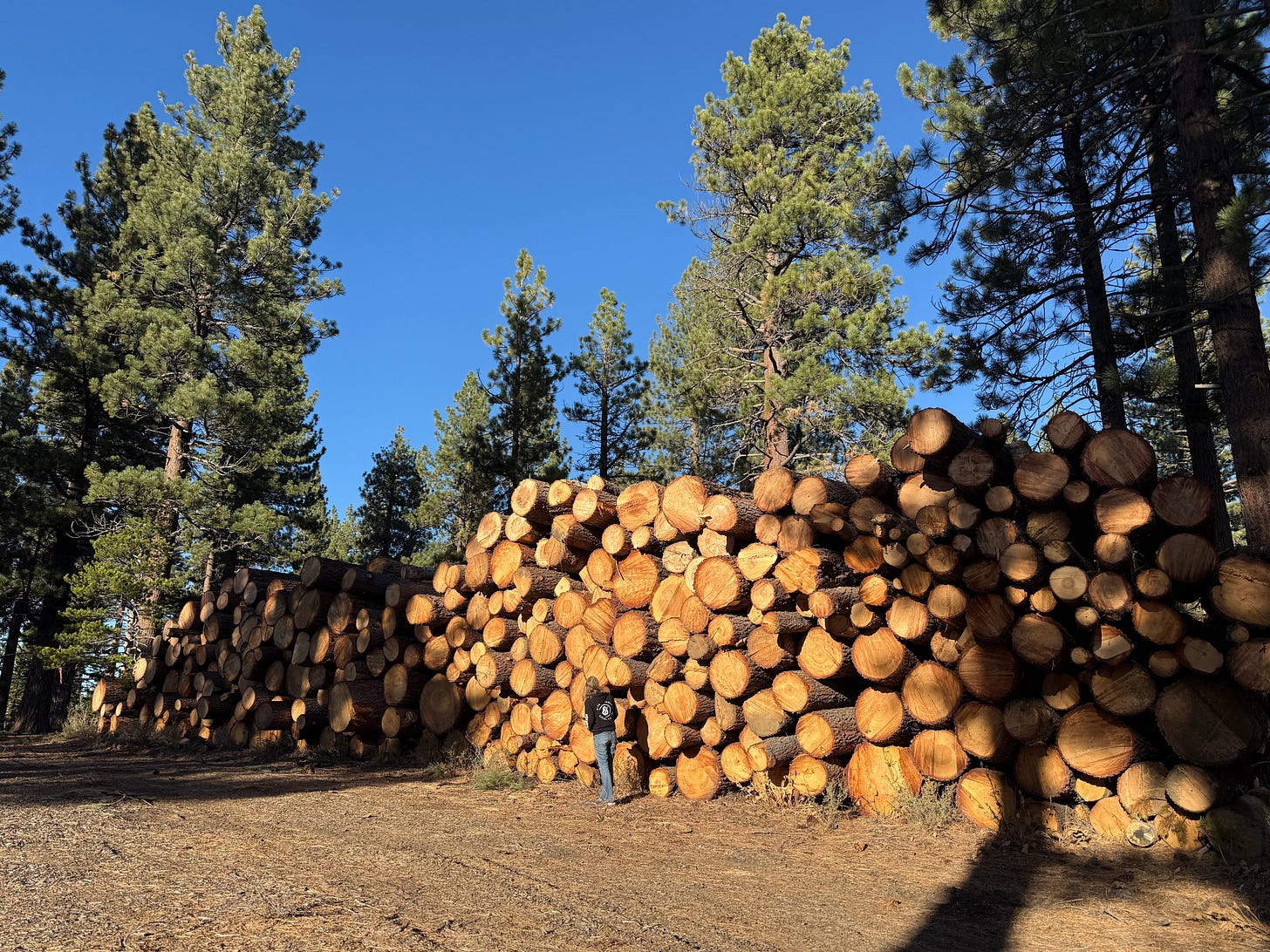
Lake Tahoe Basin Management Unit, October 2025
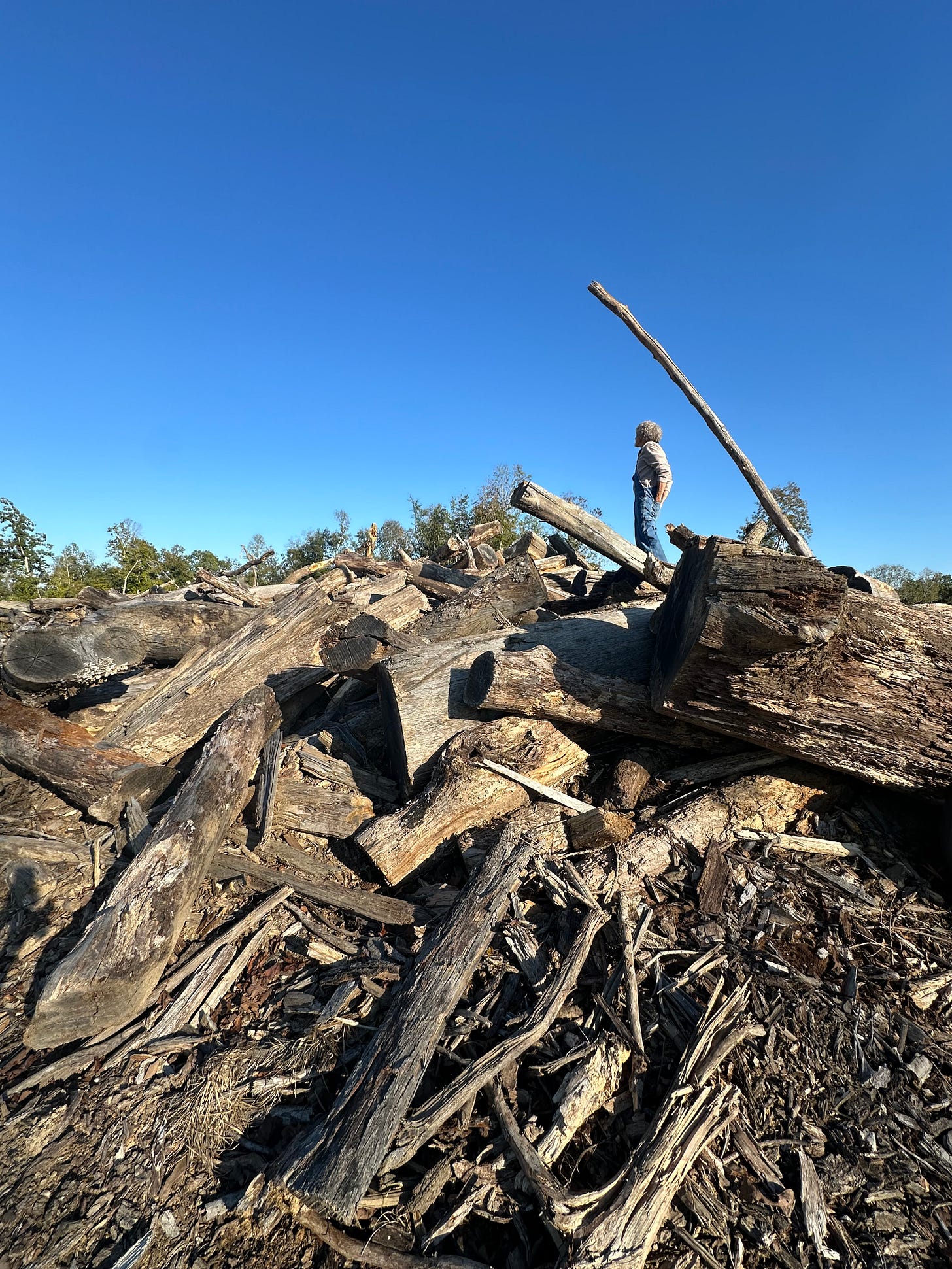
Land Between the Lakes National Recreation Area, October 2025